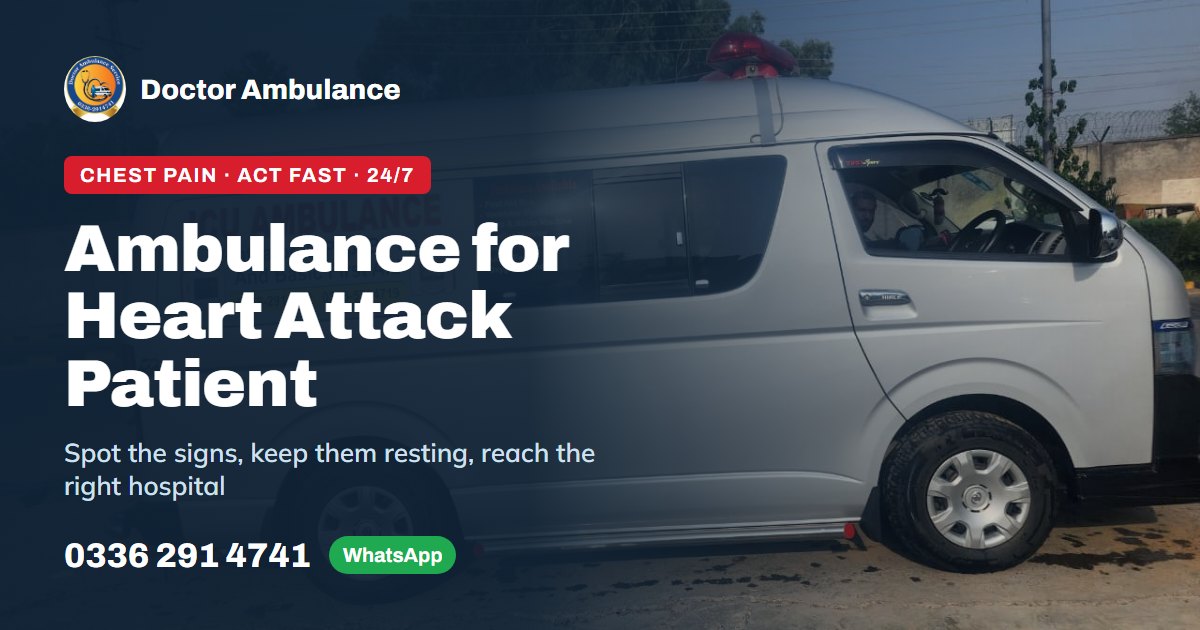
A heart attack doesn’t always look like it does in films. Sometimes it’s a sudden, crushing chest pain. But often it’s quieter: a heavy feeling in the chest, pain going into the left arm or jaw, sweating, or just feeling very unwell. Many people in Pakistan brush it off as gas or tiredness and lose precious time. This guide explains how to spot it, what to do in the first few minutes, and why booking an ambulance for heart attack patient care is safer than driving yourself.
If someone has these signs right now, call 0336 291 4741 or 0345 570 4719 first.
Signs of a heart attack
- Pain, pressure or tightness in the chest that lasts more than a few minutes
- Pain that spreads to the left arm, both arms, neck, jaw or back
- Cold sweat, feeling sick, or vomiting
- Shortness of breath, even while sitting
- Sudden weakness, dizziness or fainting
Women, older people and people with diabetes often get milder signs, like tiredness, breathlessness or an upset stomach, without much chest pain. If something feels wrong and it isn’t going away, treat it as serious.
Why book an ambulance for a heart attack patient
It seems faster to put the patient in the car. But a heart attack can get worse on the way, and the patient can collapse in the back seat while someone is driving through traffic. In an ambulance the patient lies down and rests, oxygen is ready if they need it, and trained staff keep watching their breathing and pulse until the hospital takes over. The family can also stay calm and focus on the patient instead of the road.
Not sure what kind of vehicle to ask for? Just describe the patient on the call. Our guide on which ambulance you need explains the options in simple words.
What to do in the first few minutes
- Call for an ambulance straight away. Don’t wait to see if the pain settles.
- Help the patient sit or half-lie in whatever position is most comfortable.
- Loosen tight clothes and open a window for fresh air.
- Don’t let them walk around, climb stairs or drive.
- Keep their medicines, reports and CNIC in one bag.
- If they collapse and stop breathing normally, start CPR and keep going until the crew arrives.
Only give any medicine if their own doctor has told them to take it for chest pain. The simple CPR steps are in our guide to first aid before the ambulance arrives.
Which hospital to go to
A heart patient needs a hospital with a cardiac emergency and doctors on duty around the clock. A small clinic may only stabilise the patient and then send you elsewhere, which costs time. If the patient already sees a heart specialist, their hospital is often a good choice because the records are there. Tell us when you call and we’ll take the patient where the family decides. Our ambulance service in Rawalpindi and ambulance service in Islamabad both run 24 hours a day.
Who is at higher risk
The risk is higher for people with high blood pressure, diabetes, high cholesterol, smokers, people who are overweight, and anyone who has had heart trouble before. Older parents are the most common patients we carry for chest pain. If you live with one, keep our number saved and read our guide on the ambulance for elderly patients.
After the emergency
Many heart patients are moved later: from a smaller hospital to a bigger one, or home after an angiography or a few days in the ward. A weak patient should travel lying down, not sitting in a car for an hour. Our notes on hospital to hospital patient transfer and taking a patient home after discharge will help you plan it. If the patient is critical and needs breathing support, ask for a ventilator ambulance.
Ambulance for heart attack patient: questions
Should I drive the patient myself to save time?
It’s safer not to. The patient can get worse on the way, and the driver can’t help them. Call an ambulance and keep the patient resting.
The pain went away. Do we still need to go?
Yes. Chest pain that comes and goes can still be a heart problem. Get it checked at a hospital the same day.
Can a family member travel with the patient?
Yes. One family member can usually ride along. Bring the person who knows the patient’s medicines and history.
Do you come at night?
Yes. We work 24 hours a day, seven days a week, holidays included.
How do I book?
Call 0336 291 4741 or 0345 570 4719, or send a WhatsApp with your location pin.
Keep the number saved in your phone and your parents’ phones: 0336 291 4741, or message us on WhatsApp.
Need an ambulance right now?
One call connects you to the nearest available vehicle. We dispatch immediately.