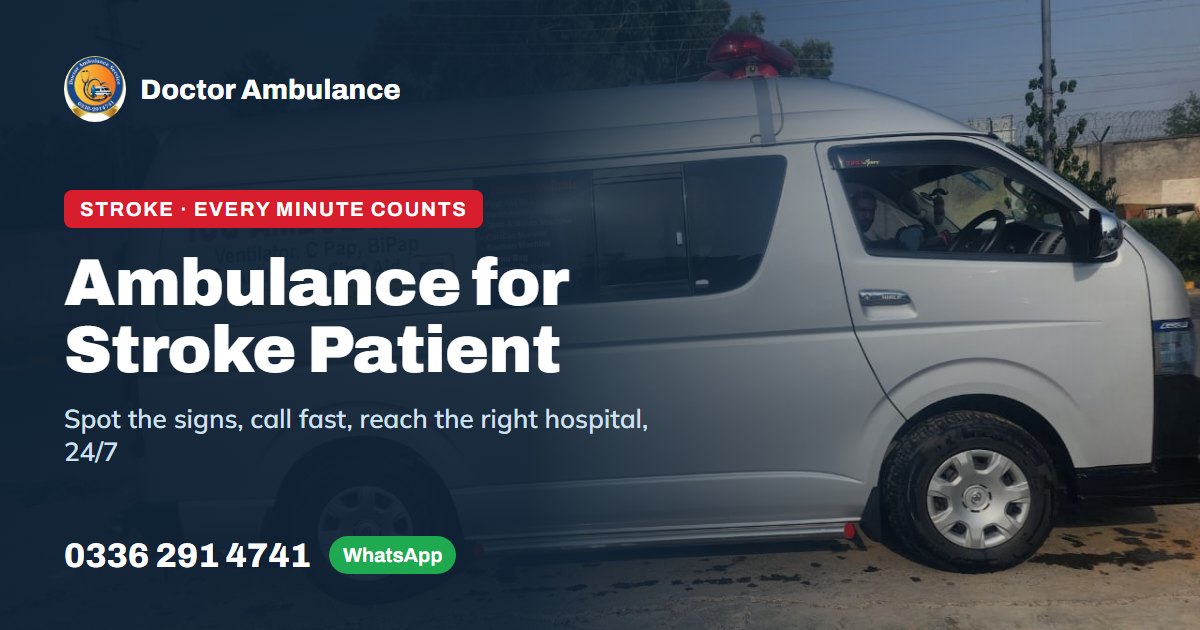
A stroke usually starts quietly. Someone’s tea cup slips, half their smile drops, or they suddenly can’t find their words. Families often think it’s tiredness or low sugar and wait for it to pass. That wait is the biggest mistake. With a stroke, every minute counts, and calling an ambulance for stroke patient care early can make a real difference to how much they recover.
If you see the signs right now, call 0336 291 4741 or 0345 570 4719 straight away.
How to spot a stroke: think FAST
Doctors use a simple word to remember the signs. It’s easy, and everyone at home should know it:
- F, Face: ask them to smile. Does one side droop?
- A, Arms: ask them to lift both arms. Does one drift down or feel weak?
- S, Speech: ask them to say a simple sentence. Is it slurred or strange?
- T, Time: if you see any of these, call for help now and note the time it started.
Other signs include sudden blurred vision, a very bad headache out of nowhere, or losing balance. Even if the signs go away after a few minutes, it still needs a doctor the same day.
Why you should book an ambulance for a stroke patient
It’s tempting to put the patient in a car and drive. But a stroke patient may be drowsy, may vomit, or may not be able to sit up. Their breathing can change on the way. In an ambulance they lie safely on a stretcher, oxygen is on hand, and the crew watches them the whole way. The crew can also call ahead so the hospital knows what’s coming. If you’re not sure what kind of vehicle is needed, our guide on which ambulance you need explains each one.
Write down the time it started
This is the one thing doctors will ask first: when was the patient last seen normal? Some stroke treatments only work within a few hours of the start. So look at the clock and remember it, or write it on your phone. If they woke up with the signs, tell the doctor the last time they were seen well before sleeping.
What to do while you wait
- Keep them lying on their side, with the head a little raised
- Don’t give food, water or any medicine by mouth, because swallowing may be affected
- Loosen tight clothes around the neck
- Stay with them and talk calmly
- Collect their CNIC, reports and medicine list, especially any blood thinners
If they stop breathing normally, start CPR and keep going until the crew takes over. Our guide to first aid before the ambulance arrives covers the basics.
Which hospital to go to
A stroke patient needs a hospital with a CT scan and doctors available around the clock, so the right treatment can start quickly. A small clinic nearby usually can’t do this and will send you on anyway, which wastes time. Tell us on the call and we’ll take the patient where the family chooses. Our ambulance service in Rawalpindi and ambulance service in Islamabad run 24 hours, every day.
Older parents are at higher risk
Most strokes happen in older people, especially those with high blood pressure, sugar or heart problems. If you live with an elderly parent, keep our number saved and a bag ready. We wrote more about this in our guide on the ambulance for elderly patients.
After the hospital
Many stroke patients spend a few days in hospital and then go home weak, sometimes unable to walk. Getting them home safely, or to another hospital for rehab, is a job for a stretcher, not a car seat. Our checklist on taking a patient home after discharge helps you plan it. If the patient is critical and on a ventilator, ask for a ventilator ambulance.
Ambulance for stroke patient: questions
Should I wait to see if the signs go away?
No. Call straight away. Stroke treatment works best when it starts early, and signs that go away can still be a warning.
Can I give the patient aspirin or water?
Don’t give anything by mouth. Some strokes are caused by bleeding, and swallowing may be affected. Let the doctors decide.
Can a family member come along?
Yes. One family member can usually travel with the patient. Bring the person who knows when the signs started.
Do you work at night?
Yes. We work 24 hours a day, seven days a week, holidays included.
How do I book?
Call 0336 291 4741 or 0345 570 4719, or send a WhatsApp with your location pin.
Save the number today, in your phone and your parents’ phones: 0336 291 4741, or message us on WhatsApp.
Need an ambulance right now?
One call connects you to the nearest available vehicle. We dispatch immediately.